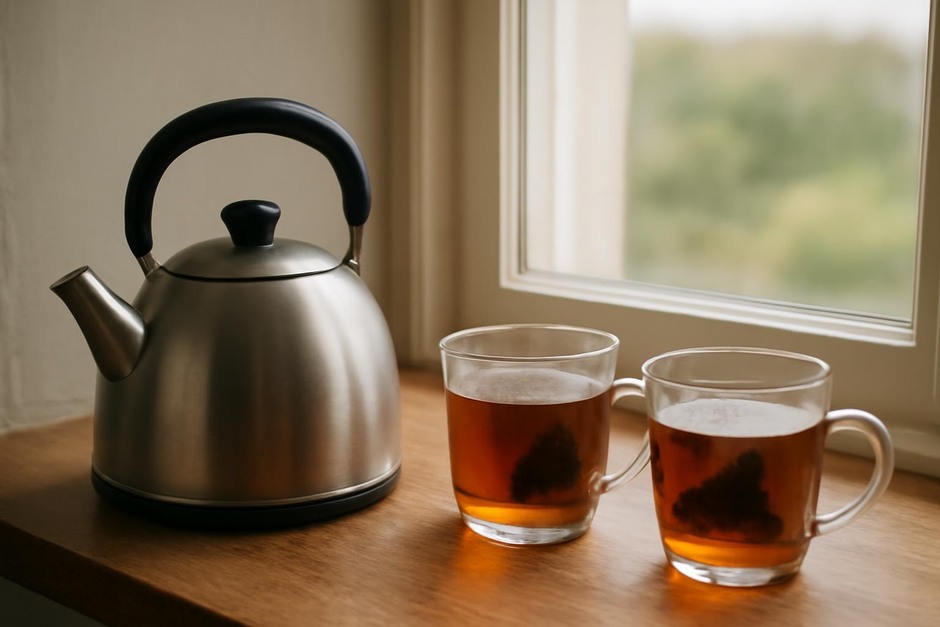
Timed Brewing vs. Intuitive Steeping: A Calm Checklist for Better Tea
There are two kindly ways most of us approach the small, repeated ritual of making tea: we either set a timer and follow a measured routine, or we rely on attention, feel, and a small repertoire of habits. Both approaches lead to good cups; both can stray. Below is a calm comparison followed by a short checklist to help you choose—and correct—each method.
Comparing the approaches
Timed brewing: steady, repeatable, technical
Timed brewing treats a cup of tea as a small recipe. You decide in advance how long leaves will steep, measure water temperature if you like, and use a timer to finish the infusion. This approach is especially useful for delicate teas (green, white) where a few seconds matter, or when you want to reproduce a particular cup consistently.
- Strengths: predictability, easy to repeat, good for learning how time affects taste.
- Common mistakes:
- Setting times too long because you forgot to factor in residual heat in the vessel.
- Assuming the same time works for different amounts of leaves or different leaf particle sizes.
- Relying only on a timer and not checking the aroma or color as a quick sanity check.
- Simple corrections:
- Use a shorter initial time and add a few seconds on subsequent steeps if needed.
- Note the leaf weight or scoop you use and keep it consistent.
- Smell and glance at the cup before pouring out the leaves; use the timer as a guide, not an absolute law.
Intuitive steeping: attentive, flexible, sensory
Intuitive steeping relies on observation—watching color, inhaling aroma, feeling the weight of the pot in your hand. It suits leisurely mornings and teas that tolerate a wider range of brewing times, such as many black teas and herbal blends. The method encourages attention and adaptability.
- Strengths: flexibility, teaches sensory awareness, gentle with unexpected changes like water temperature variations.
- Common mistakes:
- Oversteeping when distracted by other tasks in the kitchen.
- Using visual cues that vary with light (a cup by a bright window will look different from one by a lamp).
- Assuming your perception is unchanged when you are tired or in a different mood; sensory judgment can drift.
- Simple corrections:
- Pair intuition with a soft anchor: set a loose timer as a fallback if you know you can get distracted.
- Check color and aroma close to eye level, in consistent light if possible.
- Practice the same tea on several occasions to calibrate your senses—notice how a properly steeped cup smells and looks to you.
Choosing between them: a quiet guide
Neither way is superior in every circumstance. Use the points below to decide which approach fits the moment, the tea, and your goals.
- If consistency matters: choose timed brewing. When you want the same cup every day—before work or for a ritual—timing removes guesswork. Keep a small notebook or a note on your phone with your preferred times and leaf measures.
- If the tea is delicate: favor timed brewing at first. Delicate greens and whites respond strongly to seconds. Once you know the sweet spot, you can gradually introduce more intuition.
- If you want to practice attention: choose intuitive steeping. For a slower morning or a short break, let the ritual be an exercise in noticing: color, scent, the kettle’s sound.
- If your environment is busy: prefer timed brewing, or combine methods. Use a timer for the main interval and check the cup just before pouring.
- If you’re exploring new teas: start timed, then move to intuition. Timed steeps give you a baseline. After a few tries, you’ll know whether to trust your senses.
A short checklist to help you decide in the moment
- Am I rushed or distracted? If yes, set a timer.
- Is the tea delicate or unfamiliar? If yes, measure time and leaves.
- Do I want a slow, mindful break? If yes, let intuition lead but keep a soft timer if necessary.
- Do I need reproducibility (company, a ritual)? If yes, document times and stick with them.
- Have I brewed this tea before? If yes, use the approach that produced the cup you liked most.
Small adjustments—shortening a timed steep by ten seconds, or placing your cup where the light is consistent—make a big difference. The point is not to insist on one method, but to quiet common mistakes with gentle corrections so each cup can be what you need: a faithful repeat, a quiet experiment, or a brief moment of attention by the window.