A Small Studio Practice for Tuning Your Tea Break
Problem
My daily tea breaks had slipped into autopilot. The kettle goes on, a spoonful of leaves, a short scroll, then a cup finished before I realize what I noticed—or didn’t notice—about it. The problem is not that the tea is bad; it’s that I rarely know why one cup feels better than another. Without a small, repeatable way to notice differences, the habit erodes the very quiet I once sought.
Principles
Before I began, I set three simple principles to keep the practice manageable and pleasant:
- One question: ask a single, narrow question for each session (for example, “Does five extra seconds of steep add sweetness?”).
- One variable at a time: change only one thing between trials—steep time, vessel, or measure—so observations stay clear.
- Short iterations: keep experiments to 2–4 small pours or cups; this keeps the practice domestic and repeatable.
These principles turn a vague intention—”pay more attention”—into a simple method you can use at the counter without special tools.
Process (studio notes: question, method, review)
Question: “What does an extra ten seconds of steeping do to this tea?”
Method:
- Measure a familiar amount of tea and bring water to the usual boil.
- Pour for a first cup and time a standard steep (e.g., 2 minutes).
- Pour a second cup from the same leaves and time the same steep plus ten seconds (2:10).
- Taste each cup side by side, or one after the other if you have only one mug, and make short notes on aroma, body, bitterness, and finish.
Review: note the differences in plain language—”second cup feels rounder; slight honey note; bitterness begins earlier.” Keep the notes short, two or three words each. The goal is a pattern over repeated sessions, not definitive conclusions from a single try.
Examples
Here are three brief experiments I rotate through when I want to tune the ritual. Each is small enough to do in the morning without derailing the day.
1. Steep-Time Mini Test
Question: “Does a 15-second change affect sweetness or astringency?”
- Use the same leaves and same water temperature for two pours.
- Steep the first for your usual time; steep the second for +15 seconds.
- Compare mouthfeel and edges—do tannins become more pronounced? Does anything new appear in the aftertaste?
2. Vessel Swap
Question: “How does the cup shape change the way I drink and notice the tea?”
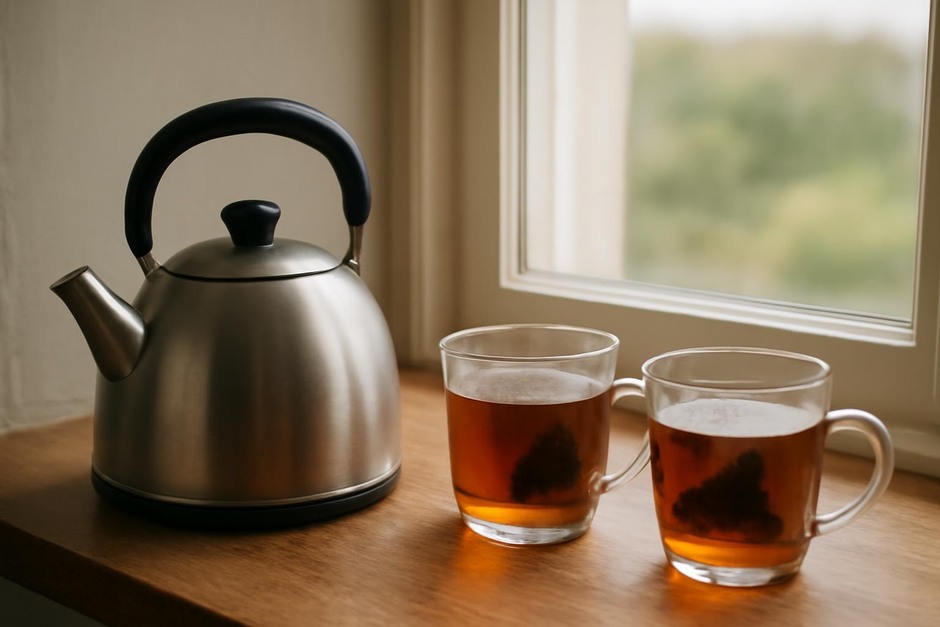
- Brew the tea once, then pour equal amounts into two different vessels—a wide bowl and a narrow cup.
- Notice how aroma is delivered (bowl opens it up; narrow cup concentrates it) and how you sip (shallower vs. deeper gulps).
- Reflect on whether the vessel changes perceived strength or comfort more than the tea itself.
3. Measure and Memory
Question: “Does half a teaspoon more leaf produce a reliably fuller cup?”
- Prepare two short brews using the same water and steep time but different leaf measures.
- Observe balance: is the fuller measure simply stronger, or does it reveal different notes?
- Write a one-sentence memo to anchor the memory for the next time you reach for those leaves.
Review
After several short sessions you begin to recognize small, repeatable shifts: a pot that benefits from longer steeping, a vessel that makes green tea feel sweeter, or a particular leaf that multiplies bitterness if measured too generously. The point is not to chase perfection, but to learn which tiny choices reliably support the kind of cup you want on a given morning.
Practice Checklist
- Choose one focused question for the session.
- Change only one variable at a time.
- Keep experiments to 2–4 quick pours.
- Make a two- or three-word note about aroma, body, and finish.
- Repeat the same mini-test on different days to confirm patterns.
- Let the findings influence one small choice the next time you brew.
Over time, these tiny studio notes turn the ritual from an automatic act into a cultivated pause—one that fits neatly between kettle and window without requiring a lab or much fuss. The practice is less about better tea and more about learning to be present for that quiet, steeped moment.